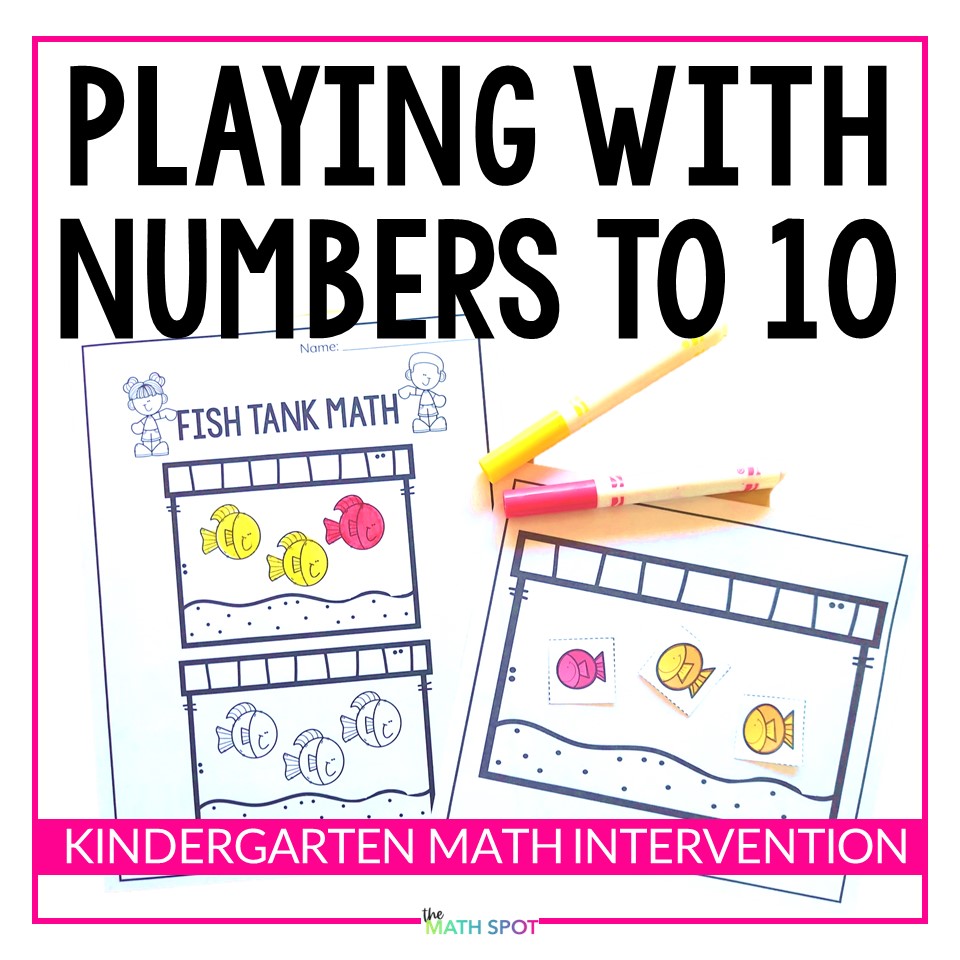
Last week we talked about the importance and purpose of visual models and where they live within the CRA progression. If you missed that post, you can read it here. This week, our focus is on counting models. These are models that support students in using the count sequence, but they also support number sense concepts as well.
When students understand the count sequence, they are better prepared for operations, place value, and fractions.
Kindergarten and First Grade: The Number Path
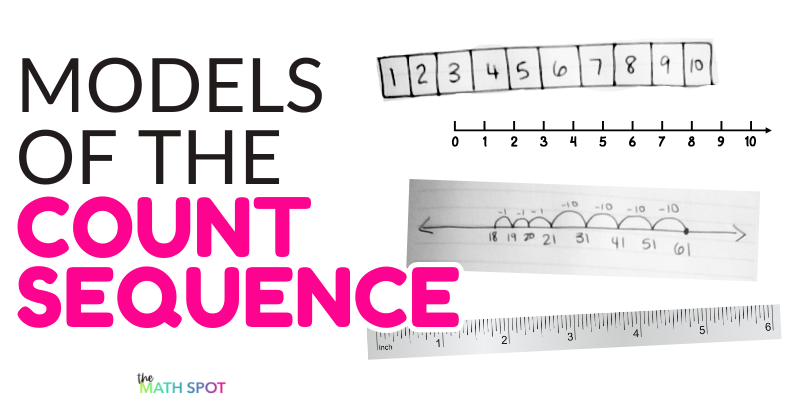
In kindergarten and first grade, students are best supported by working with a number path.
Most teachers are familiar with a number line where each number sits on a notch along the line. It can be tricky for the youngest students to conceptualize the notch on a line versus the space between the notches. For this reason, in kindergarten and first grade, students are often better served by a number path.

On a number path, each number is presented as its own space along the path rather than as a point on a length model. This is much more concrete for young learners to understand.
Working with a number path helps students see how numbers are connected to one another in a sequence. Using a number path allows students to internalize the count sequence. It also supports number sense relationships such as one more and one less.
If you are looking for concrete activities your kindergarten and first grade students can complete on a number path, this blog post includes a variety of classroom ideas:
https://k5mathspot.com/understanding-the-count-sequence/
Late First Grade and Beyond: Moving to the Number Line
Once students understand the count sequence, can confidently move up and down the number path, and have some basic addition and subtraction skills, it is time to move from a number path to a number line.
Where a number path shows each number as an individual piece in a count sequence, the number line allows students to measure the distance between numbers. That distance is not clearly visible on a number path.
In late first grade and beyond, we want to support students with a model that allows them to clearly see difference and distance.
Transitioning to the number line also allows for the use of an open number line. Students no longer need to write every number on the line in order for it to be useful.
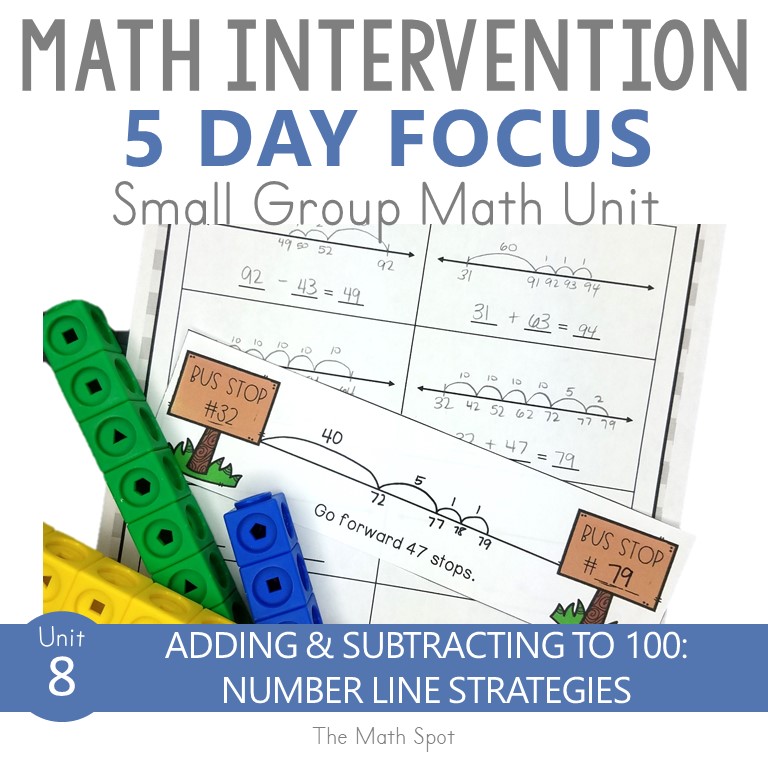
For example, a student could use an open number line to subtract 61 − 43 without ever having to unbundle. The student could start at 61 and jump back a group of 10 four times, then jump back three more ones. The open number line allows students to work flexibly with groups of 1, 10, 100, or even 1,000 and beyond without the tool becoming cumbersome. This is not a strategy you would expect students to use on paper in the future. The open number line is supporting students in a way that will allow them to do mental math for addition and subtraction in the future. You can read more about the progression of addition and subtraction strategies based on place value here.
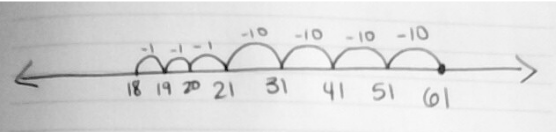
At this stage, we are using the model to relate the count sequence directly to operations.
Counting Models and Fractions
When we begin to teach students about fractions, we have the opportunity to revisit these linear models in a new way.
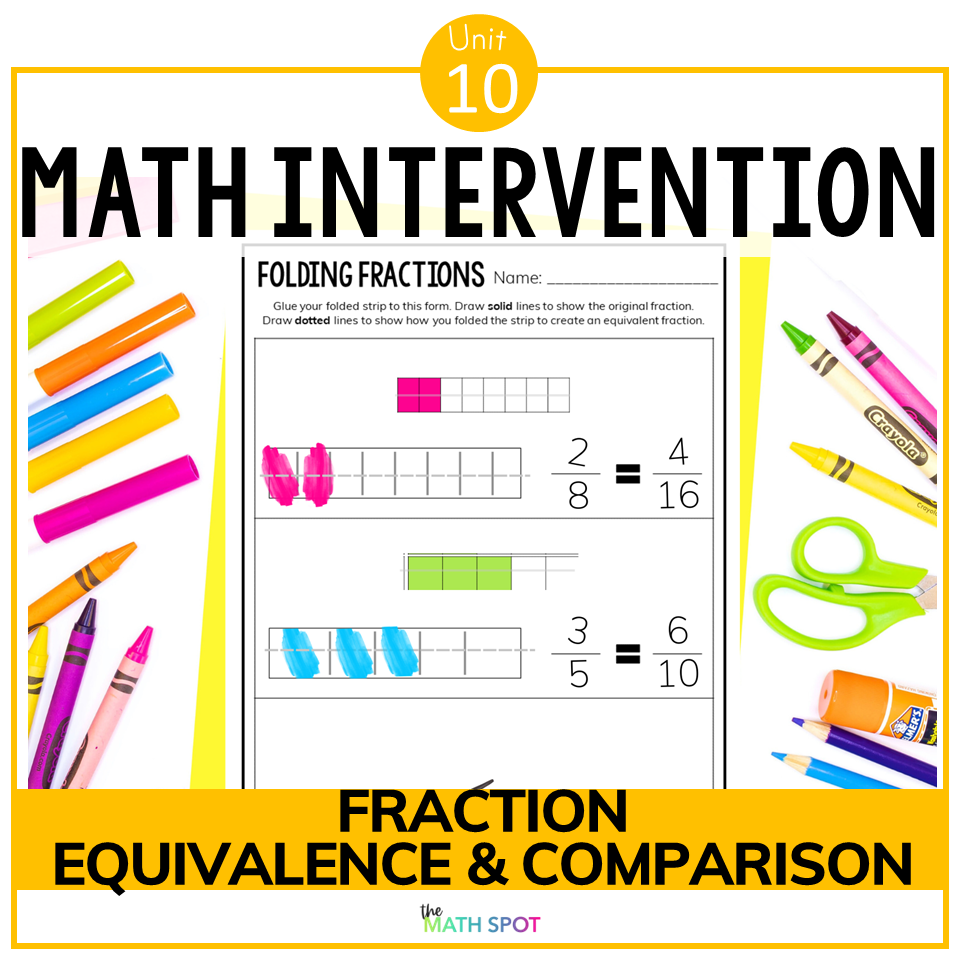
When students are first learning about fractions, we might opt for a fraction bar model to clearly show how unit fractions are combined to create a whole. Later, we want to provide students with the benefits of an open number line, so we move back to a number line model.
The number line is especially important for fractions because it reinforces that fractions are numbers. A ruler, for example, is a number line in practice.
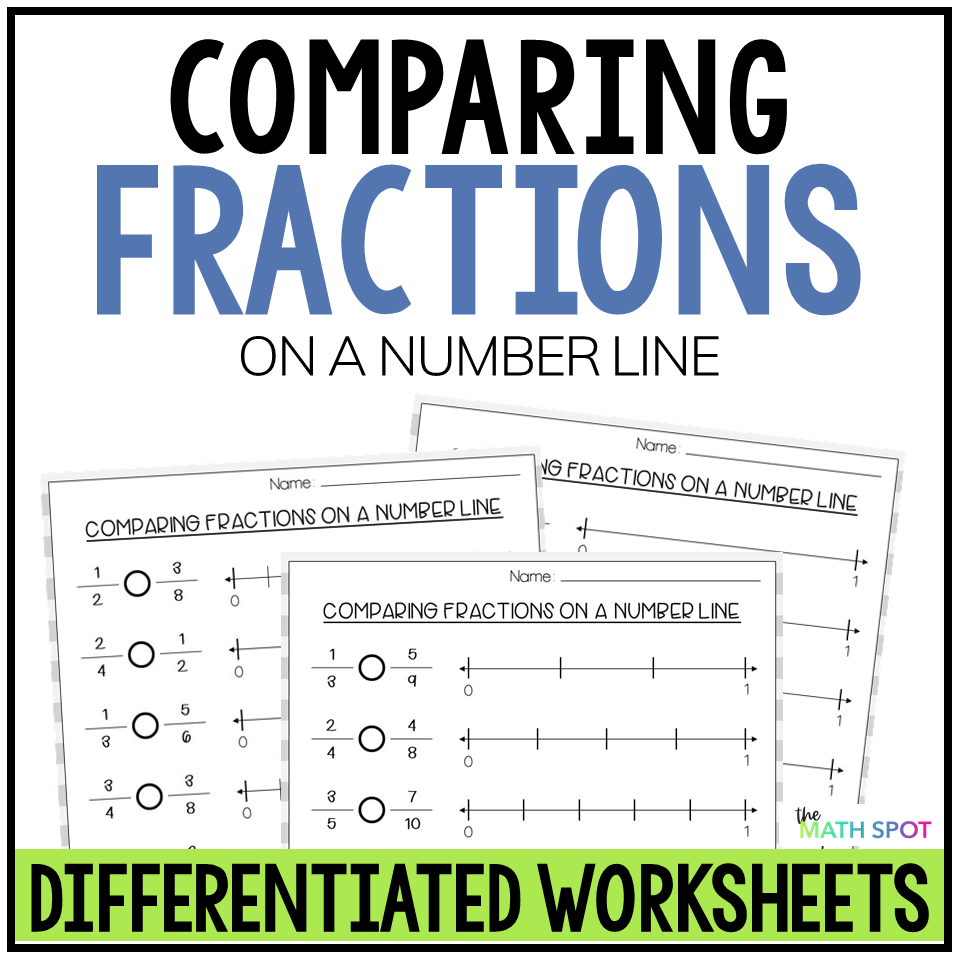
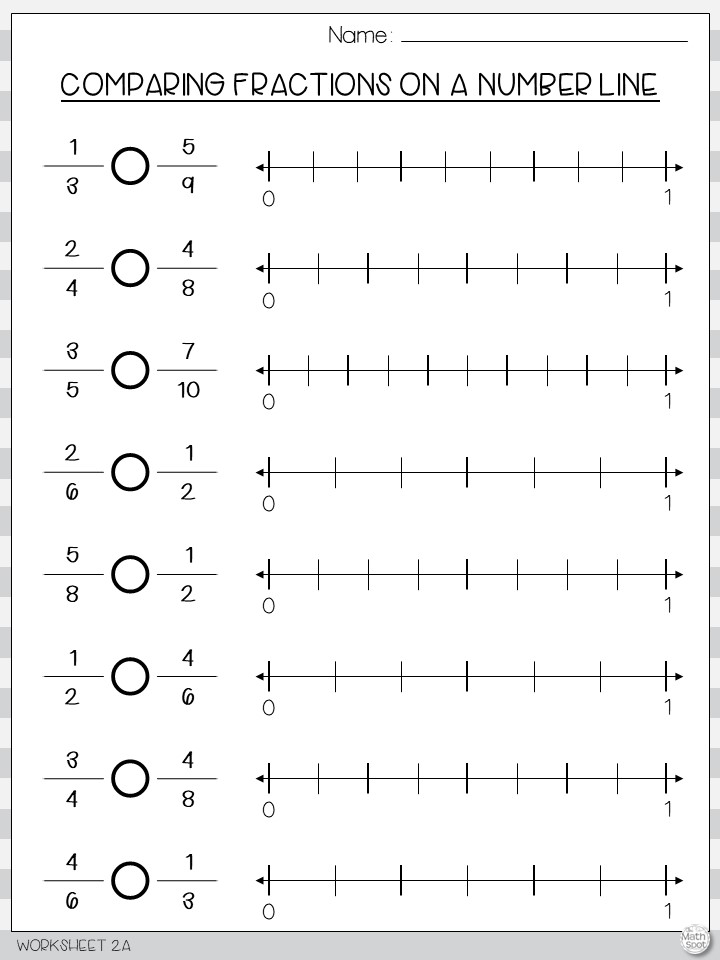
Students can use a number line to plot, compare, add, and subtract fractions. The structure of the count sequence model continues to support their reasoning, even as the numbers become more complex.
Talking Count Sequence? Consider Which Model You Choose!
From number paths to number lines to open number lines and fraction number lines, these models grow with students.
In kindergarten, they support development of the count sequence along with the number sense concept of one more and one less.
In elementary grades, they support a length model for the count sequence, addition, subtraction and mental math.
In upper elementary, number lines support reasoning about magnitude, distance, and fractions.
When we are thoughtful about the models we use to support the count sequence, we are building number sense that extends well beyond counting!
Related Resources From The Math Spot