This post contains affiliate links. This means that when you make a purchase, at no additional cost to you, I will earn a small commission.
Over the past few weeks, we have been exploring different types of visual models and how they support student thinking across grade levels.
After talking about the importance of visual models overall, we looked at models of the count sequence such as number paths and number lines. Then we looked at part–whole models and why number bonds should not be skipped.
This week we are looking at another important category of visual models: discrete models.
What Is a Discrete Model?
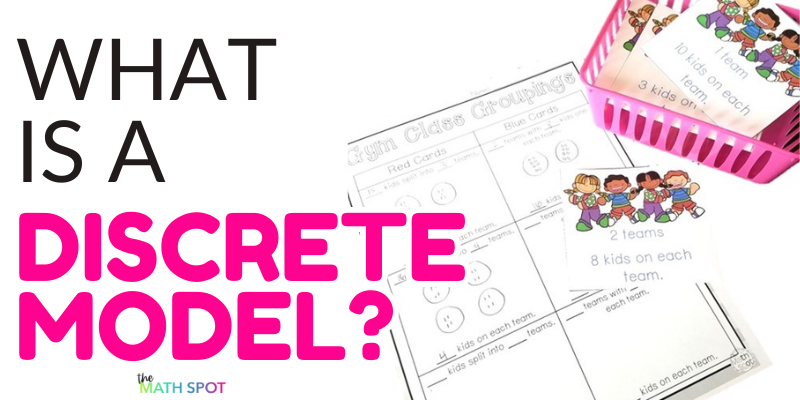
A discrete model represents numbers using countable objects.
Instead of showing numbers as lengths on a line or sections of an area, discrete models show numbers as individual items that can be counted. You can liken this to the “count all” level one strategy for operations.
Students might see:
- dots
- cubes
- drawings of objects
- pictures representing groups
These models allow students to count the pieces that make up a quantity visually. If you have ever grabbed a whiteboard and drawn circles to represent a concept, you are well acquainted with discrete models!
Discrete Models in Early Elementary
Discrete models appear very early in elementary classrooms. In kindergarten, students might count pictures of animals, blocks, or dots. The model represents the number they are exploring.
For example, a student might count five apples or seven stars. The objects themselves represent the number. These models help students connect counting words to actual quantities.
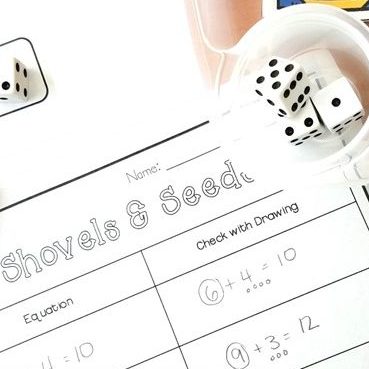
This supports counting objects in kindergarten but as you move into late kindergarten and 1st grade you will see these models supporting an early understanding of operations. Students can see 2 circles, 3 circles, count them all and relate that to the equation 2 + 3 = 5.
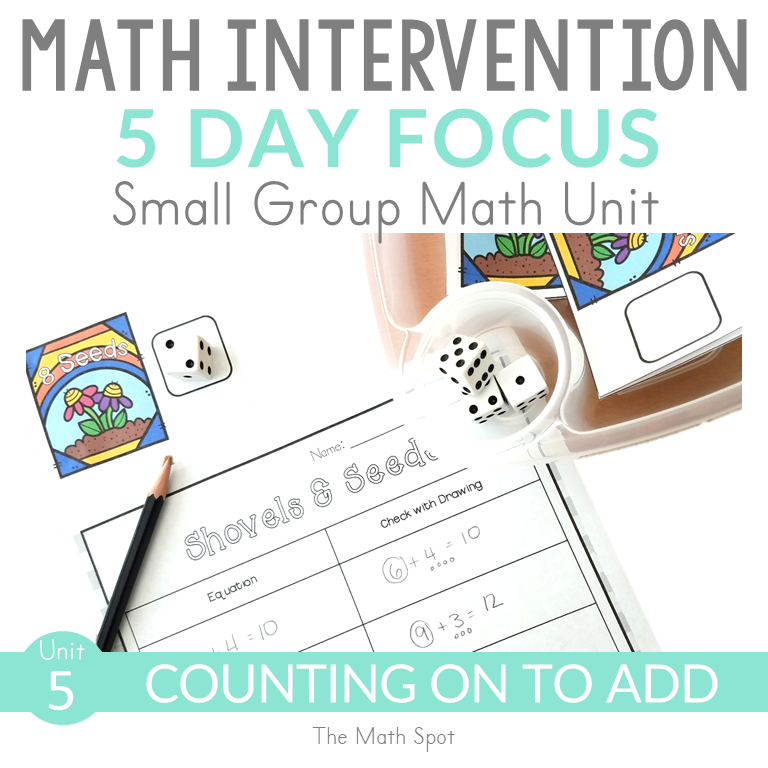
I also use a version of a discrete model to teach the counting on strategy. I will draw a circle with a number and then additional dots and ask students to count on to find the total. These models offer a lot of support to students while still moving them away from the need for hands-on materials.
From Counting to Equal Groups
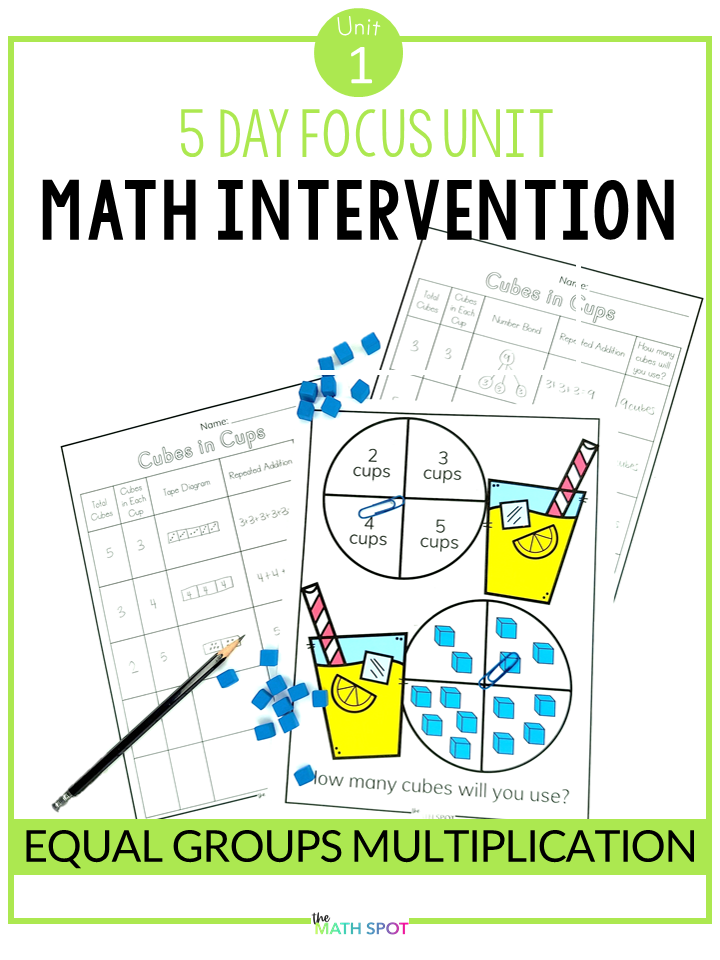
As students grow, discrete models continue to support their understanding. In second and third grade, these models often appear as equal groups drawings. Students might draw three groups of four objects. The drawing helps them see that multiplication represents equal groups being combined.
It can be very tempting to skip over these drawings because they seem a bit tedious but these models are so supportive of students in terms of helping them to understand equal groups, multiplication and division equations.
Of course, keep in mind when you are working with models that we want to continue to “think CRA“. We are building a web of understanding! So instead of using the discrete model alone to teach about equal groups, I might also pair it with a number bond model that more clearly shows the part/whole relationship. I might also ask students to write a matching equation to get to the abstract level.
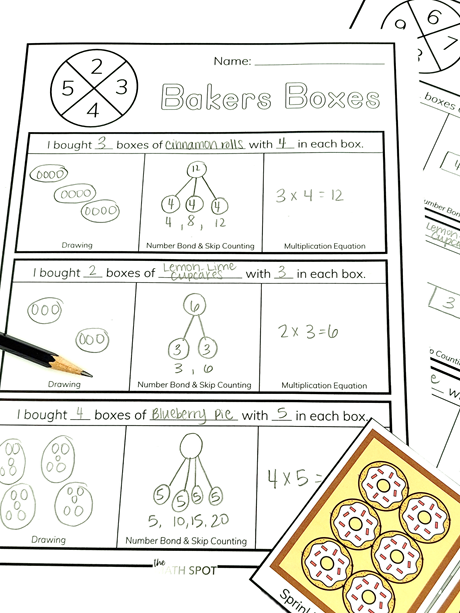
I was recently working with 4th grade students an a “new to me” student mentioned that she really had no idea what division meant. I honestly found this to be a high level of awareness. She had a procedure she was using for division but recognized that even though she could execute the procedure she had no idea what it *meant* to divide something. We moved to concrete materials to model division for her and she found that very helpful. For the next few days whenever she was solving a division problem I had her draw a discrete model of that problem to pair with the problem to be sure we were continuing to ground her ability to solve these models in meaning of what division means and does to numbers!
Fractions of a Set
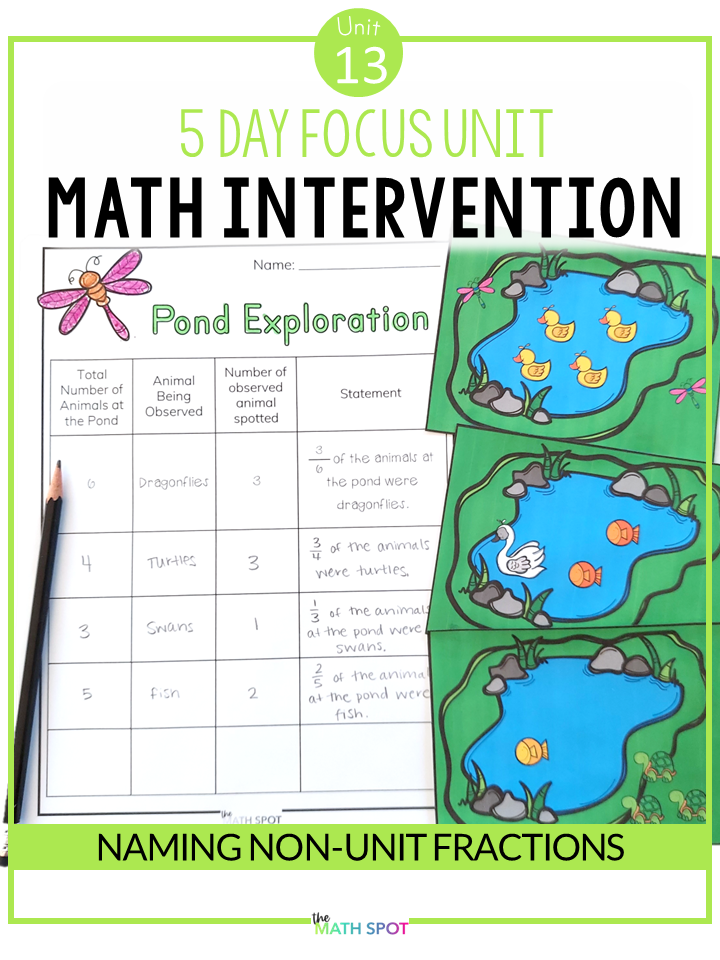
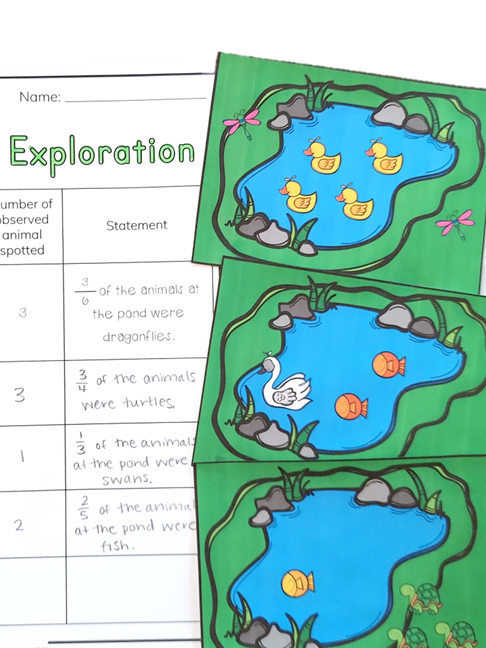
Discrete models also play an important role when students begin working with fractions. When I introduce fractions, I am sure to show students that we can name fractions as a fraction of a whole object (a partitioned shape), we can represent a fraction on a number line and we can also use fractions to represent parts of a set.
For example, if a student sees 12 objects and circles 4 of them, they can see that 4 out of 12 objects represent one-third of the set.
This is different from area models or fraction bars, but it represents the same mathematical idea.
Students are still reasoning about parts and wholes. The difference is that the whole is made-up of individual countable pieces.
Why Discrete Models Are Important Beyond Kindergarten
Discrete models do not disappear as students move into upper grades. A lot of times as students get older we move into visual models like a bar model that pre-group numbers together. Students are asked to write a number on the bar to represent the quantity and the lift can be quite heavy for many students.
A discrete model that allows students to see and count individual pieces is important as your students explore increasingly complex math concepts!
They continue to support ideas such as:
- equal groups
- multiplication and division
- fractions of a set
- ratio reasoning
Discrete models help students see how quantities are built from countable pieces.
Related Resources