This post contains affiliate links. This means that when you make a purchase, at no additional cost to you, I will earn a small commission.
Week 5 of our focus on fact fluency is an interesting one, because this is where we make a shift.
Miss weeks 1-4? Start here Week 1 | Week 2 | Week 3 | Week 4
Up until now, I have spent a lot of time advocating for number sense, concrete materials, fact relationships, and drawn models. I have repeatedly said, “Don’t jump straight to flashcards,” and I stand by that. But this week, I am going to say something that might sound like a change of direction.
Flashcards have their place.
Fact Recall is Key to Memorization
Once students understand their facts, they need repeated opportunities to recall that information in order to move it into long-term memory and make that recall automatic. Understanding alone does not get facts to stick. Students need to retrieve those facts again and again.
What we want to avoid is starting here.
If we jump straight to memorization, we are asking students to memorize far too many individual pieces of information with no structure to support them. That is very different from what we are talking about now.
At this point in the arc, students have already:
- Built number sense
- Learned fact relationships
- Used concrete materials and models
- Practiced strategies that help them solve facts efficiently
Now we are asking them to use what they already know repeatedly so it becomes automatic.
This is such an important distinction!
Using Flashcards Strategically
If the goal is high-volume opportunities to recall, flashcards can be one tool. The way I use flashcards, though, is very intentional.
For example, if I have been working with hands-on materials to support the one more relationship, I might end that session by pulling out only +1 and +0 flashcards. Zero facts are a previously learned relationship, and +1 facts directly connect to the work we just did.
I am not handing students a full stack of mixed facts. I am asking them to apply exactly what they already learned and already understand, quickly and repeatedly.
In that context, flashcards are reinforcing meaning, not replacing it. This is often an activity that helps students to build confidence around their math facts too. They can not believe they know so many facts so quickly!
Why Games are Often the Better Option
Flashcards are not the only way to provide repeated recall opportunities. Math games are a fantastic option because students get high-volume practice in a low-stakes environment. They stay engaged, they want to play again, and they are often willing to practice far longer than they would with a traditional worksheet or flashcard stack.
Just like with flashcards, though, specificity is key here!
If you are working on +1 facts, look for games that ask students to practice exactly those facts. If you are working on doubles, use games that reinforce doubles.
Games should match the relationship students are currently developing.
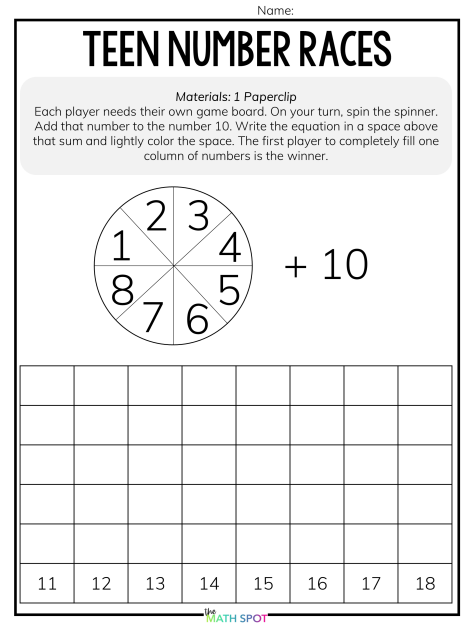
In a game like Teen Number Races, students practice their 10+ facts over and over. Instead of a generic board game paired with a pile of flashcards, this type of game gives students repeated opportunities to apply a strategy they already know.
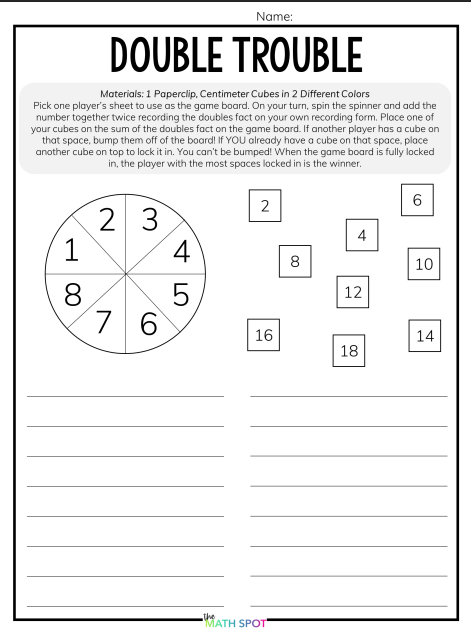
Double Trouble is a spinner game that allows partners to compete while practicing doubles facts specifically. The structure of the game keeps the focus narrow, which is exactly what we want at this stage.
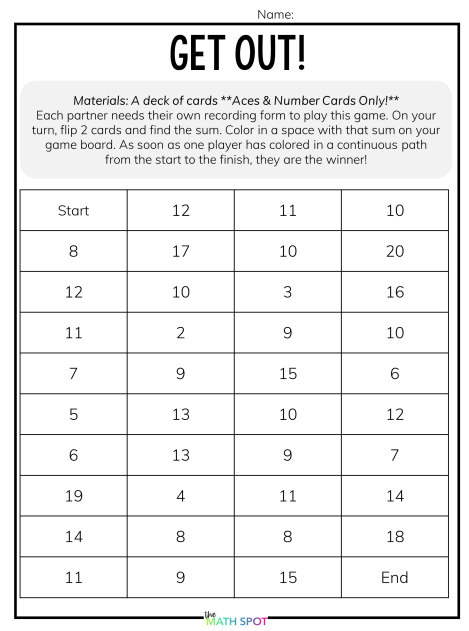
As students grow in their fact fluency, games that mix problem types together can also be useful. Games like Get Out combine math practice with other strategic elements, which keeps them fun and engaging for students to play repeatedly.
Matching recall to readiness
The key idea in Week 5 is not “now we memorize.” The key idea is that once students have the tools to solve facts, we give them many chances to retrieve those facts so the work becomes more efficient over time.
Recall should be:
- Targeted to a specific relationship and including practice with previously learned relationships
- Based on strategies students already understand
- Frequent, but not overwhelming
Related resources from The Math Spot
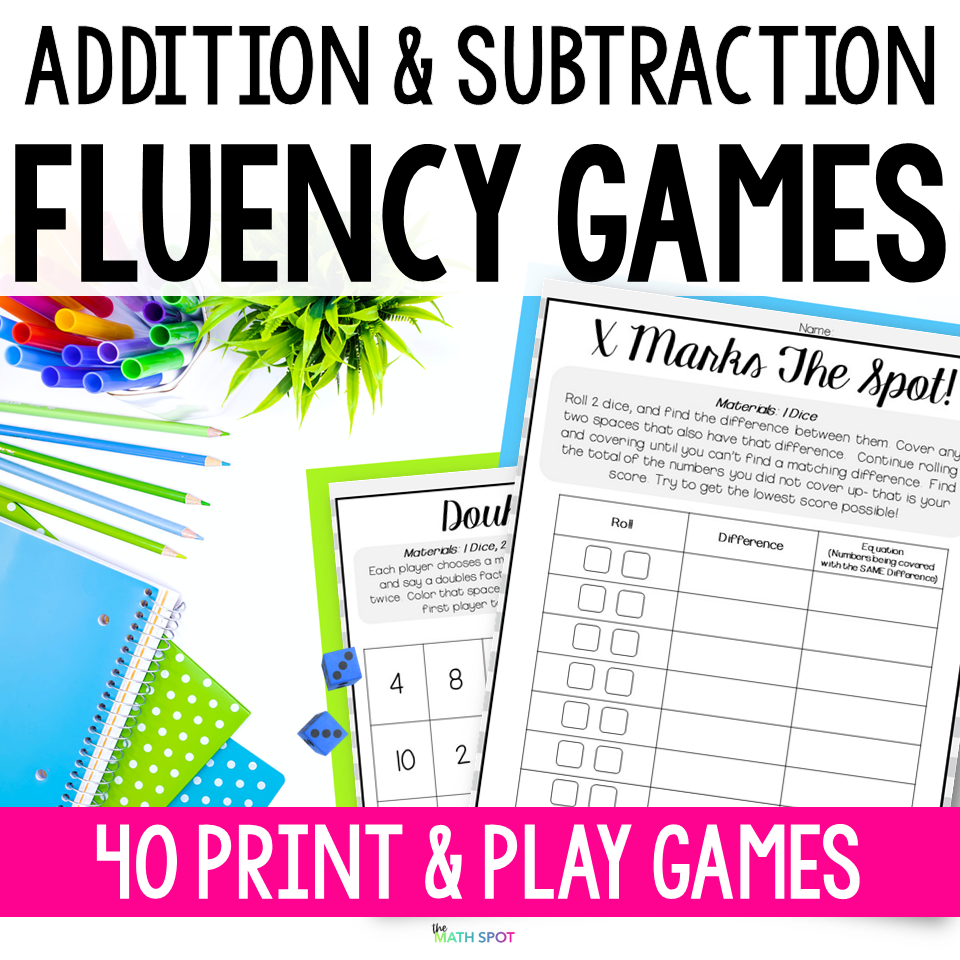
I have a collection of 40 addition and subtraction games that require either a spinner, dice, a deck of cards, or dominoes. The set includes a mix of strategy-specific games and mixed practice games so you can meet students where they are.
This allows you to choose games that reinforce exactly the relationships your students are working on, while still providing the repeated recall opportunities that move facts into their memory!