
This post contains affiliate links. This means that when you make a purchase, at no additional cost to you, I will earn a small commission.
You have a group of students with a math need that you want to support. It is extremely tempting to start searching for activities that will support understanding and practicing that skill. I am begging you, please don’t do this! You are planning your instruction backwards!
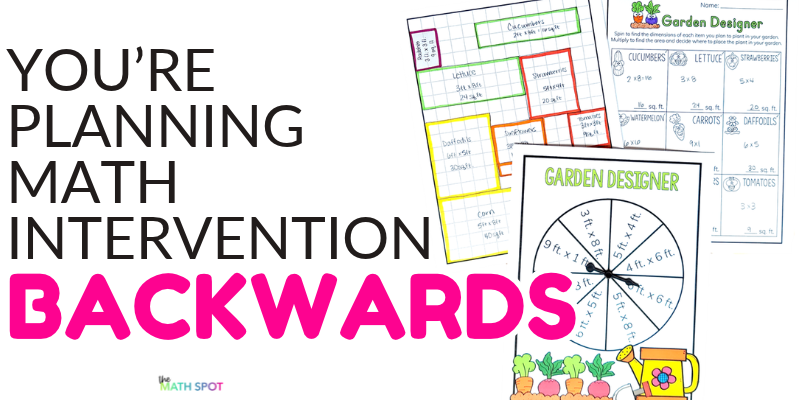
It seems obvious, but this needs to be the absolute gold standard when it comes to math intervention. Instead of starting by looking for activities, I want you to begin by getting extremely clear about what you want your students to know and be able to do by the end of your intervention period. Remember, math intervention is specific, time-bound work toward a specific skill or goal.
If your math goal is for students to be able to mentally add or subtract 1 or 10 from a given two-digit number, then the first thing you need to do when planning that instruction is create a post-assessment.
This does not need to be a long assessment. You are simply testing the one skill you are targeting in the next week or so.
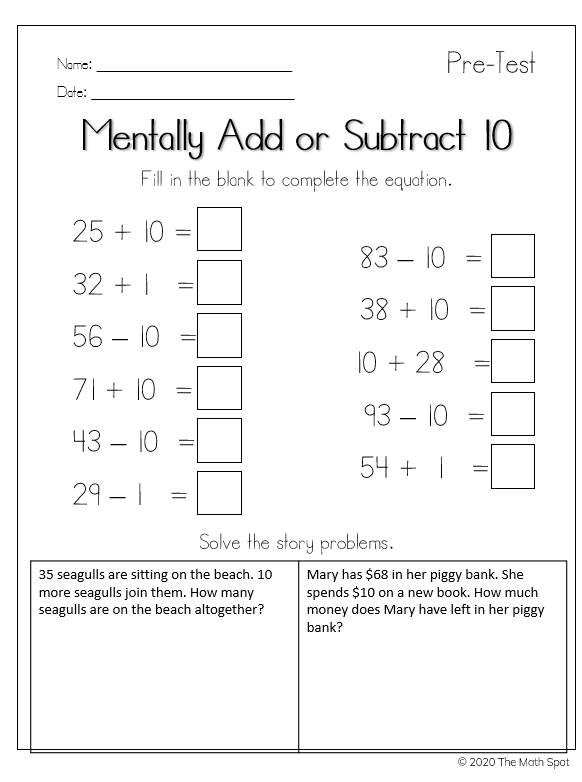
Next, I want you to look at that assessment and say, “In order for my students to do the work on that final assessment, what steps would they need to take to get there?” This is when the concrete, representational, and abstract (CRA) progression can absolutely come into play.
If I want students to add or subtract 1 or 10 from a given number, I might start with adding 10 using base-ten blocks, then move to subtracting 10 using those materials. Next, I would introduce mixed practice with adding and subtracting 1 or 10 before moving to visual models and, finally, mental math.
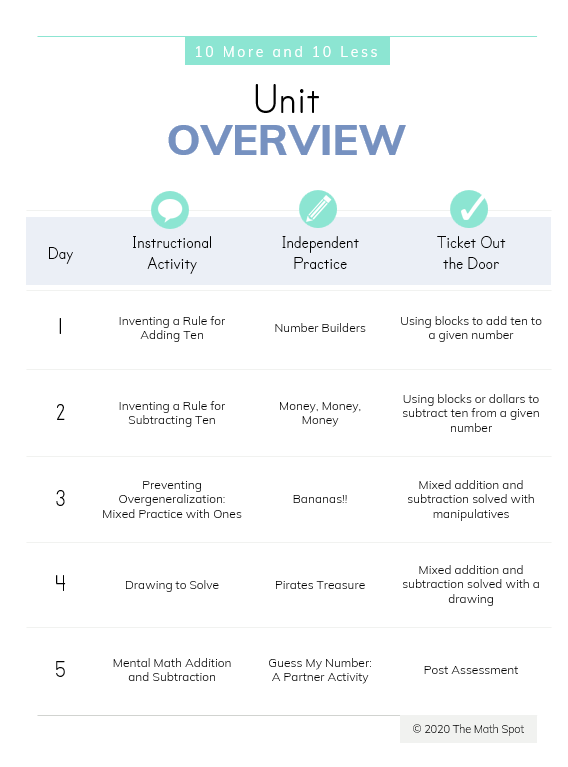
Once I have created this pathway, I am STILL not looking for activities just yet. Now, I’m planning exit tickets for each day of instruction. If step one is adding 10 using base-ten blocks, I am going to create an exit ticket that simply asks students to do exactly that. Now, I have a five-day progression and four days of exit tickets, with the post-assessment serving as my assessment for the fifth day of instruction.
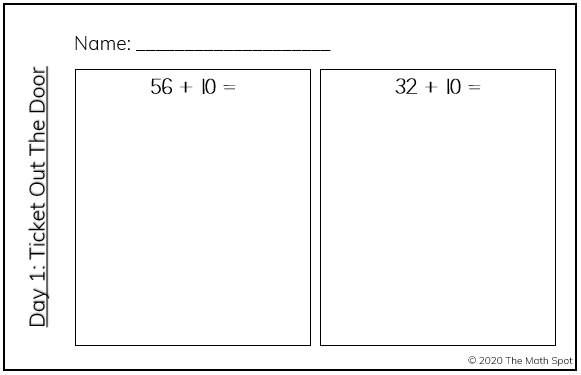
At this point, you have five days of assessment monitoring your students’ progress toward the end goal of the unit, and you have a general map of the target you will work toward each day.
At the end of the unit, we don’t want students who are able to perform these skills only with the support of a teacher. We are looking for independence. So before I determine what it would look like to teach this skill, I think about, “What would it look like to practice this skill independently?” Need more clarity on exactly what “this skill” is? Look at your exit ticket for the day!
Your job at this point is to find or create math activities that allow your students to practice that specific skill independently. In my 5 Day Focus activities, I prioritize activities that use dice, playing cards, or specialized decks to generate numbers so that students can use the activities over and over. If you have access to worksheets, those can work as well.
Just be sure that the independent practice mirrors the skill and level of support in your exit ticket as closely as possible. If you want students to be able to add 10 using base-ten blocks, then the independent practice should require students to use base-ten blocks, AND the exit ticket should require the use of that material as well!
It’s time for the final piece of the puzzle. This is the point where you can go and look for activities that teach your skill. But now, you are more prepared to look for and evaluate those activities.
Instead of spending five days doing random “activities for adding and subtracting 1 or 10 mentally,” you can build a meaningful pathway for your students that begins with concrete materials and moves toward representational models and mental math. You have honored addition and subtraction as separate skills before bringing them together, and you know exactly what proficiency looks like along the way!
As you are implementing your math unit, keep a close eye on your students’ independent practice and exit tickets. If your students are successfully completing that work independently, you can confidently move ahead! If your students are getting hung up, now you know exactly which step of the ladder introduced difficulty. You can pinpoint the skill you need to spend more time on, continue practicing, or reteach using another method.
The next time you sit down to plan a math intervention unit, start with what you want your students to be able to do independently by the end. Create your assessment, map out the steps, and plan how students will practice and show their understanding along the way. THEN look for your instructional activities! Each piece of your unit will have a clear purpose, and you will be able to see whether your instruction is helping your students move toward the goal you chose.
If you want to spend your planning time thinking about your students rather than creating each piece of a unit from scratch, my 5 Day Focus math intervention units bring these pieces together for you. Each unit includes a pre- and post-assessment, a sequence of instructional lessons, independent practice activities, and daily exit tickets.
Want the unit featured in this post? The 10 More and 10 Less Intervention Unit supports students in moving from hands-on materials to mental math as they add and subtract 1 or 10.
Working on a different target skill? Here are a few more units that follow the same planning structure:
You can also browse the full collection of math intervention resources to find a unit that matches the specific skill your students need next.