This post contains affiliate links. This means that when you make a purchase, at no additional cost to you, I will earn a small commission.
Fact fluency is often treated like something we should be able to squeeze in quickly. A game you play for a few minutes at the end of math if there is time left. When students struggle, the response is usually to add more practice and repetition.
For most students, fluency needs do not necessarily indicate that they just need more practice. Many times, underlying number sense needs are what are holding students back.
The Number Sense Relationships That Support Fact Fluency
The number sense relationships that support fact fluency do not begin in first grade. They are the focus of kindergarten and even pre-k instruction and are necessary for the work students are expected to do in first grade and beyond.
The four number sense relationships that consistently support fact fluency are:
- Spatial relationships
- Part-whole thinking
- Benchmarks of 5 and 10
- One and two more and less
When these relationships are developed intentionally, students are building facts on top of ideas they already understand rather than memorizing individual facts.
How Number Sense Plays Out in Fact Fluency Instruction
If a student is struggling with +1 facts, there is a more efficient method than hitting the +1 flashcards. Instead, give students work with number lines, counting sequences, and visual models that strengthen their understanding of the one more and one less relationship.
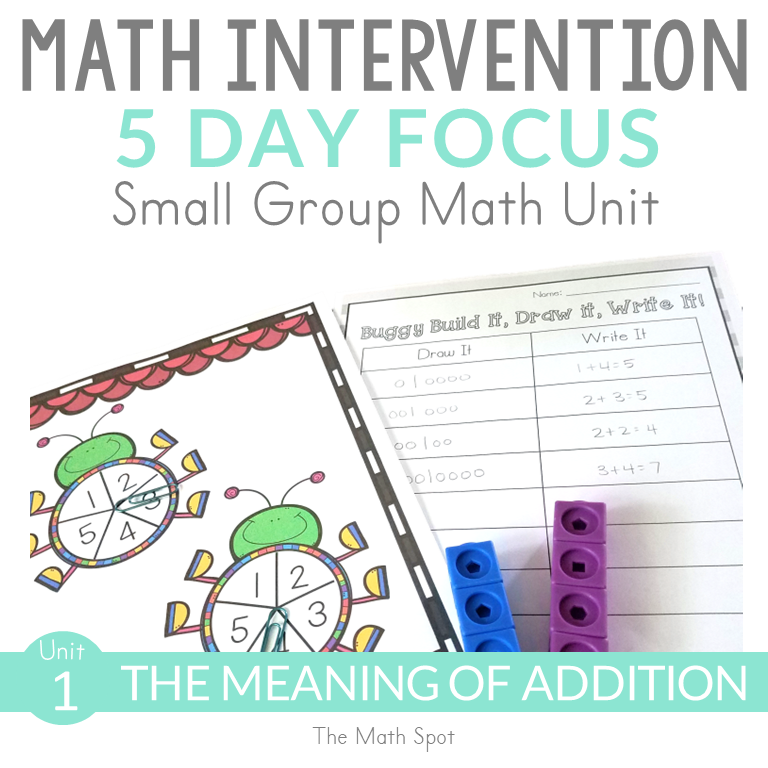
You will need to make the explicit connection for your students “If we know 5, one more is 6 then we also know 5 + 1! That fact is just saying what is five and then one more?” A lot of students know a collection of strategies for addition but have lost the actual meaning of addition. Anchor your students back in!
If a student does not know that one more than 6 is 7, then 6 + 1 is not going to immediately trigger a response. The issue is not the equation but rather a lack of number sense around the one more one less relationship.
The same pattern shows up when students struggle with partners of ten. When combinations like 6 and 4 or 8 and 2 are not secure, it is often because students have not had enough experience working with benchmarks of 5 and 10. Students who have spent time composing and decomposing numbers using five frames, ten frames, dot patterns, and concrete models tend to approach these facts with more confidence because the relationships are already familiar.
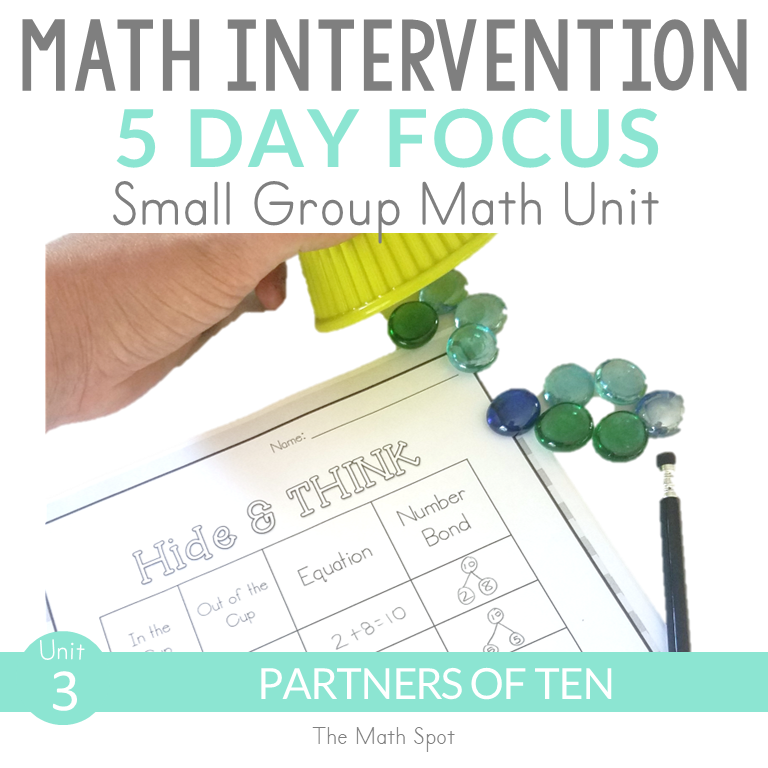
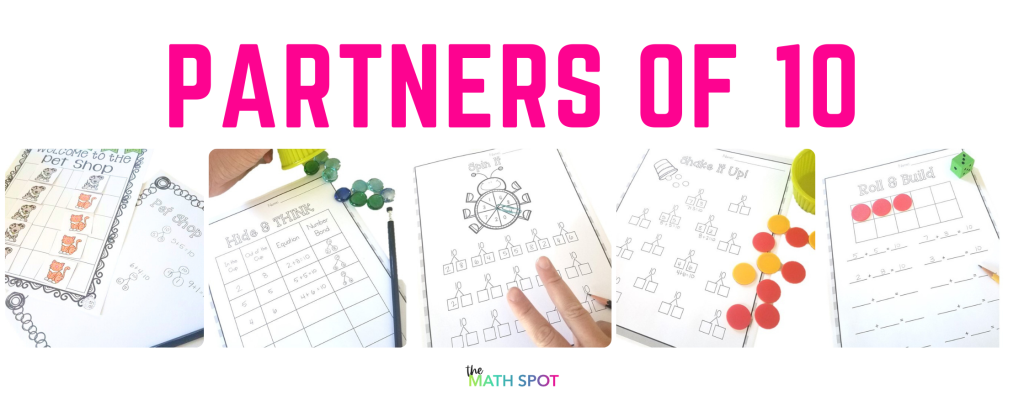
My Partners of Ten unit is truly an exercise in number sense. Every day students practice the partners of ten from a different number sense building angle. They play shake and spill to reinforce the part/whole relationship, they work with a variety of materials on a ten frame to build the benchmarks of 10 relationshp, they use their 10 fingers and recognize fingers up and fingers down as partners of ten, they work in the context of an open ended story problem with a ten frame as a support and they play “Hide and Think” to reinforce the part/whole relationship and to move toward automaticity. Truly, developing number sense and leaning on number sense relationships is the key to building fact fluency.
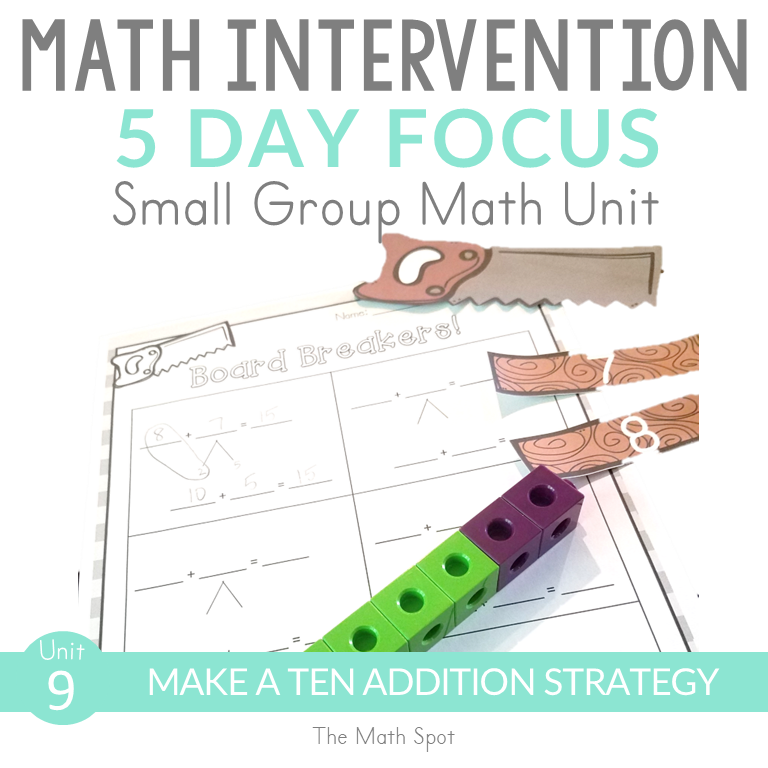
The make a ten strategy draws on both benchmarks of 5 and 10 and part whole thinking. Students are breaking numbers apart and putting them back together in ways they have practiced repeatedly during earlier instruction.
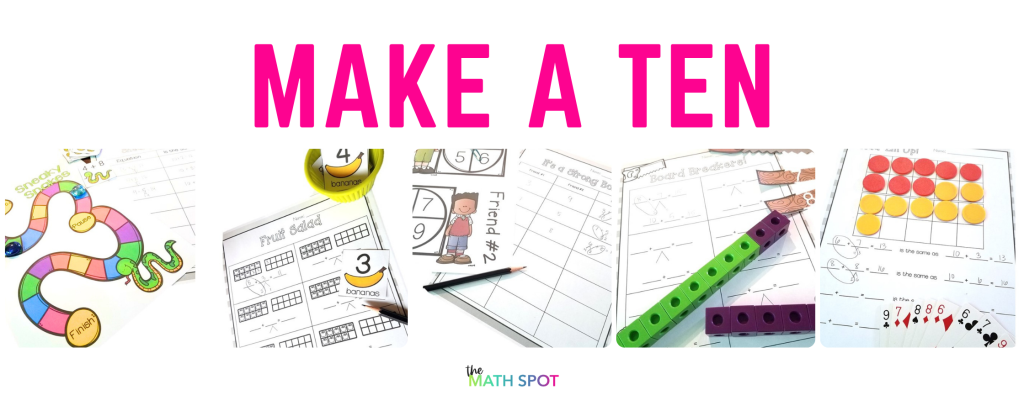
My Make a Ten unit is another example of a unit that aims to develop fact fluency through number sense relationships. Students are constantly using double ten frames to see how two addends create “a ten and some more”. We are leaning on both spatial relationships and the benchmarks of 5 and 10 relationship. Students also use number bonds and linking cubes to reinforce the part/whole relationship that is critical to this decomposition type strategy!
Near doubles and near partners of ten rely on similar thinking. Students reason from a known fact and adjust by one or two. For students who learned their +1 facts by flash cards a fact like 6 + 7 is another isolated fact. For students who studied the “one more” relationship, the student can see 6 + 7 as “one more than” 6 + 6. When students do not have that flexibility, they often rely on counting because the number relationships are not yet strong enough to support mental strategies.
Memorization is STILL the End Goal
Students do need many opportunities to recall facts in order to move them into long-term memory. Repeated exposure and practice ultimately will be the ticket to automatic recall.
What we want to avoid is starting with memorization before the underlying number sense relationships are in place.
When students are asked to memorize facts without understanding how numbers are connected, the work becomes unnecessarily difficult and tedious because each fact is an individual piece of information. When number sense instruction is intentional, recall practice becomes more effective because students have meaningful relationships to draw from.
This is why fluency should not exist only in a separate block of time. When number relationships are developed inside core units of study, fluency grows alongside that work instead of competing with it.
Looking Backward to Support Progress
When students struggle with fact fluency, it can be helpful to pause and look backward rather than immediately adding more practice.
- Which number sense relationships are secure for your students?
- Which ones need more time and attention?
Strengthening number sense supports fluency development and makes later recall practice more productive.
So About Those Fact Fluency Games…
Am I asking you to throw out the fluency games at the end of your math block? ABSOLUTELY NOT!
Repeated opportunities to recall facts will make those facts more automatic. But for a student who is struggling to learn facts, take a step back and notice that more practice might not be the place you need to start.
Fact fluency develops over time through connected instruction. When students have repeated opportunities to work with number relationships and then practice recalling facts built on those relationships, fluency becomes much more attainable.
Related Resources From The Math Spot